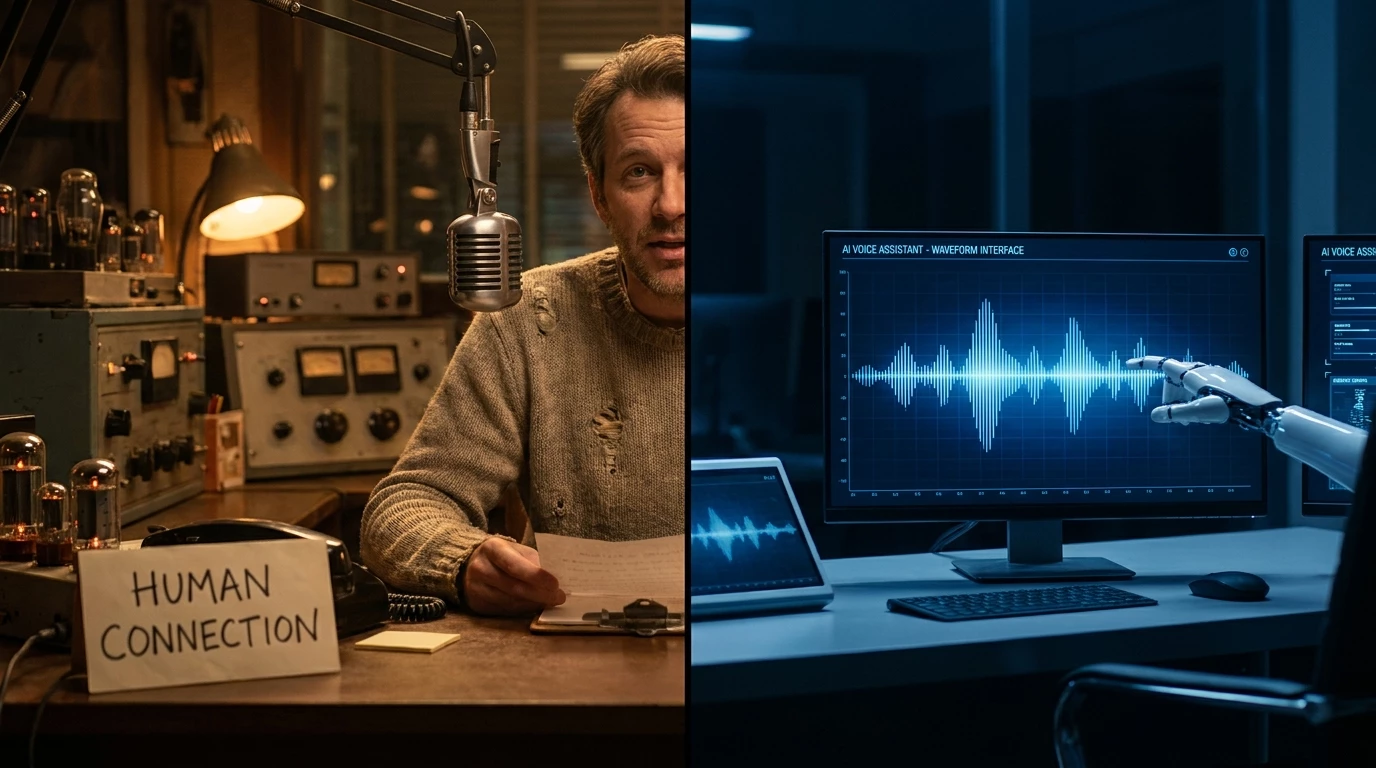
The debate shaking radio
In 2026, AI-generated voices have reached a quality level that makes this debate legitimate. More and more stations are integrating synthetic voices into their schedules.
Where AI voice excels
Availability: an AI voice is available 24/7, 365 days a year. For automated slots (overnight, weekends), it's invaluable.
Consistency: same tone, same energy, same quality every time. For radio imaging, this reliability is precious.
Cost: an AI spot costs a fraction of a professional voice actor. For a budget-conscious local radio, it's decisive.
Speed: a spot ready in 2 minutes. The SpeakRadio workflow proves it.
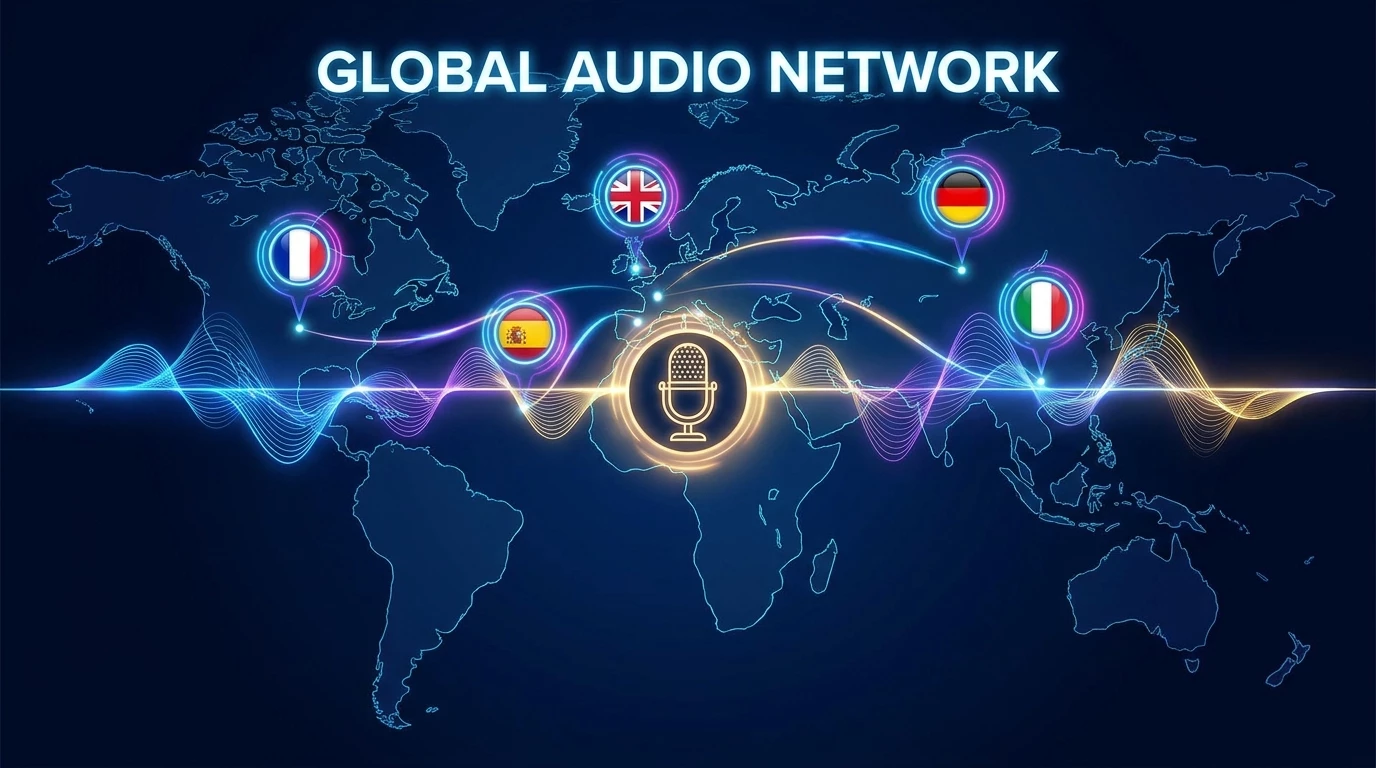
Multilingual: a station can broadcast in 5 languages without hiring bilingual presenters.
Where human voice keeps the edge
Improvisation: reacting to breaking news, engaging with callers... That's human territory.
Authentic emotion: a presenter who genuinely laughs creates a bond AI cannot replicate.
Proximity: listeners want to hear their presenter, the one they see at the local market.
The real answer: complementarity
The most effective stations combine both. AI handles ad spots, jingles, voice-tracks and automated news. Humans focus on live shows and interviews.
Verdict
In 2026, it's not about choosing between AI and human, but finding the right balance. AI is an extraordinary production tool. Humans remain the heart of radio. Together, they make a station more effective.